

How to Drill a Hole in Concrete
Published by Robert Carlisle on Dec 30th 2009
Drilling a hole in concrete is a common activity for professional contractors as well as Do-It-Yourselfers and is one that needs to be done correctly and safely. There are a couple of situations when a hole would need to be drilled in concrete. These situations include:
1. A hole needs to be drilled in a concrete, brick or block wall to create a pathway for pipe or wiring.
2. A hole needs to be drilled in order to install a concrete fastener or anchor. (This situation will be the focus of this article.)
Drilling into concrete may seem intimidating, but with the proper tools and equipment, it is well within the means of the average Do-It-Yourselfer.
Tools Needed to Drill into Concrete
It is important to use a hammer drill or rotary hammer drill in concrete applications. A standard drill is insufficient when drilling into concrete because the drilling/rotating action is not enough to break the concrete. The hammering action of a hammer drill will chisel away the concrete while the rotary action drills the hole. This dual action allows for quicker drilling with less effort, and more importantly, creates a hole of superior quality. Some important options to consider when buying a hammer drill include:
- Variable speed setting
- Depth gauge
- Good handle and grip
These features are not necessary to get the job done correctly but will make a concrete drilling job easier.
Carbide Tipped Drill Bits for Concrete Drilling
When drilling a hole for a concrete fastener, the quality of the hole is critical. For this reason, it is imperative to use a proper drill bit. A proper bit for drilling a hole for a concrete anchor is an ANSI tolerance, carbide-tipped drill bit. The type of carbide-tipped bit needed is dependent upon the type of hammer drill being used. Carbide-tipped drill bits are simply named for their bit retention system (how the bit is held in the drill).
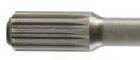 The spline hammer bit has a spline shank that has 12 teeth that fit into the spline drive of a hammer drill.
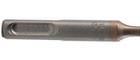
 The SDS drill bit is a Slotted Drive Shaft that is held in place by the slots on the sides of the shaft.
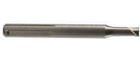
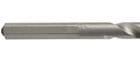 The hammer bit is a straight hex shank that is held in place with a Jacob's style chuck.
 The SDS max drill bit is similar to the SDS bit but has a larger diameter shank.
** This drill bit is typically only used by professionals.
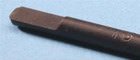 The Tapcon® drill bit that is typically included with a box of Tapcon® concrete screws has a round shank with a notch at the end. This bit can be put into a drill with a Jacob's style chuck. This drill bit can also be used with a Tapcon® Installation Kit. The adapter that is included in the installation kit is keyed into the chuck and the bit is then inserted into the adapter. Both options are ideal for drilling holes for Tapcons.
Determined the Right Size Hole to Drill
Once you have determined the type of drill bit needed, you need to figure out what size hole is required for the fastener you are using. Below is a chart showing the different concrete anchors and their required hole diameters:
| Type of Fastener/Anchor | Anchor Dia. | Hole Size | Type of Fastener/Anchor | Anchor Dia. | Hole Size | |||
| Wedge Anchor | Anchor Size | = Hole Size | Single Expansion Anchor | 1/4" | 1/2" | |||
| Drop-in Anchor | 1/4" | 3/8" | 5/16" | 5/8" | ||||
| 3/8" | 1/2" | 3/8" | 5/8" | |||||
| 1/2" | 5/8" | 1/2" | 7/8" | |||||
| 5/8" | 7/8" | 5/8" | 1" | |||||
| 3/4" | 1" | 3/4" | 1-1/4" | |||||
| Sleeve Anchor | Anchor Size | = Hole Size | Double Expansion Anchor | 1/4" | 1/2" | |||
| Machine Screw Anchor | #10 | 3/8" | 5/16" | 5/8" | ||||
| 5/16" | 5/8" | 3/8" | 3/4" | |||||
| 1/4" | 1/2" | 1/2" | 7/8" | |||||
| 3/8" | 3/4" | 5/8" | 1" | |||||
| 1/2" | 7/8" | 3/4" | 1-1/4" | |||||
| 5/8" | 1-1/8" | Lag Shield Anchors | 1/4" | 1/2" | ||||
| 3/4" | 1-1/4" | 5/16" | 1/2" | |||||
| Strike Anchor | Anchor Size | = Hole Size | 3/8" | 5/8" | ||||
| Leadwood Screw Anchor | #6-8 | 1/4" | 1/2" | 3/4" | ||||
| #10-14 | 5/16" | 5/8" | 7/8" | |||||
| #16-18 | 3/8" | 3/4" | 1" | |||||
| Hammer Drive Anchor | 3/16" | 3/16" | Tapcon Screws | 3/16" | 5/32" | |||
| 1/4" | 1/4" | 1/4" | 3/16" | |||||
| Split Drive Anchor | Anchor Size | = Hole Size |
Required Safety Equipment
Tech Tip:
When drilling a hole to install a concrete fastener, it is also important to have tools on hand to remove residual dust from the hole. This could be compressed air, a wire brush or a shop vac/vacuum.
Now that you have the appropriate hammer drill and bit, you should think about safety equipment. Safety goggles are a must to protect eyes from dust and concrete chips. Due to the dust, you may also want to consider wearing a dust mask. All drilling jobs tend to be noisy, but hammer drilling is considerably louder than standard drilling. Therefore, ear protection is important (especially for larger jobs).
The Drilling Process
Before drilling begins, you may want to mark the spot(s) where the hole(s) is (are) to be drilled in the base material. This helps prevent errors in hole placement during installation. Now you are ready to start drilling!
1. Insert the carbide-tipped masonry bit into your hammer drill. If your drill is so equipped, you will want to set the depth gauge at this point. If the drill is not outfitted with a depth gauge, you can easily mark the depth on the drill bit itself with tape.
2. Set the tip of the drill bit on your mark. Apply only enough pressure to keep the bit from bouncing. Unlike drilling into wood, the extra force will not speed up the drilling process when drilling into concrete. Too much pressure will actually have a negative effect when drilling into concrete and may cause the bit to break off or bind up in the hole.
Tech Tip:
Be careful not to touch the bit after removing it from the hole-
IT WILL BE HOT!
3. Start off drilling slowly, creating a shallow hole that will act as a guide when drilling the rest of the hole. Begin drilling at a high speed to drill the rest of the hole, ensuring that the drill is held level. When drilling deeper holes, you can periodically pull the bit out to remove some of the concrete dust that is created.
Once the hole is complete, be sure to remove all concrete dust before installing a concrete fastener.
Tips for Productive Concrete Drilling
- Use a hammer drill.
- Use proper ANSI tolerance, carbide-tipped drill bits.
- Let the tool do the work- apply even pressure throughout.
- Hold the drill level during the entire drilling process.